There's something special about lacing up skates on a frozen pond or neighborhood ODR as the cold air hits your face. Outdoor hockey connects players to the roots of the game, stripping away the controlled environment of indoor rinks and replacing it with cracked ice, snowbanks for boards, and the kind of freedom that makes kids fall in love with hockey in the first place.
ODR season offers more than nostalgia, though. Training outdoors in cold conditions builds skills and mental toughness in ways that climate-controlled arenas simply cannot replicate. Whether you're working on a backyard rink, a community ODR, or a frozen pond, the winter months present a unique opportunity to develop as a player.
Here are five drills that work in outdoor settings, along with guidance on making the most of cold weather training.
Benefits of Cold Weather Training
Training outdoors in winter forces players to adapt. Ice conditions vary from session to session. Wind affects puck movement. Cold hands demand better grip and stick control. These variables create problem-solving opportunities that translate directly to game situations.
Cold weather also builds mental resilience. Players who train through discomfort develop the ability to focus when things get hard. That mindset carries into late-period fatigue, playoff pressure, and any situation where pushing through difficulty matters.
There's also the simple benefit of ice time. ODRs and backyard rinks give players access to skating and puck work that doesn't depend on arena schedules. For families with young players, this extra ice time compounds over a season.
5 Essential Outdoor Hockey Drills
These drills are designed for ODR and pond settings where space may be limited, ice quality varies, and conditions demand adaptability. Keep them simple, focus on repetition, and embrace the imperfect environment.
1. Tight-Space Stickhandling Circuits
Outdoor ice often means smaller surfaces. Use that constraint to your advantage by working on puck control in tight spaces.
Set up three to five markers (pucks, gloves, or snow mounds work fine) in a small area about 10 feet square. Stickhandle through and around the markers in different patterns: figure eights, random weaves, backward loops. Focus on keeping your head up and maintaining soft hands despite the cold.
If you want to add structure to your tight-space work, stickhandling drills with the extreme dangler offers progressions that translate well to outdoor settings.
2. Point-to-Point Shooting
Find two spots on the ice about 20 to 30 feet from a target area (a net, a snowbank, or a marked spot on the boards). Skate from point A to point B while carrying the puck, then release a shot as you reach the second marker. Retrieve the puck and repeat from the opposite direction.
This drill combines skating, puck control, and shooting into a single sequence. Vary your release point, shot type (wrist, snap, backhand), and skating speed as you progress. The uneven outdoor ice adds a layer of difficulty that sharpens your ability to shoot under imperfect conditions.
For players looking to refine their shooting technique, drills to improve your shooting provides additional exercises that work both indoors and out.
3. Partner Passing Under Pressure
If you have a training partner, set up 15 to 20 feet apart and exchange passes while moving laterally. Both players shuffle side to side while maintaining passing accuracy. Start slow and increase speed as the pattern becomes comfortable.
This drill develops peripheral vision, timing, and the ability to execute skills while your body is in motion. The outdoor setting adds variables: wind affects the puck, uneven ice creates bad bounces, and cold hands make clean reception harder. All of these challenges build adaptability.
For solo players, a rebounder or boards substitute for a partner. Even without perfect equipment, finding a wall or snowbank that returns the puck creates opportunities for repetition.
4. Transition Skating with Puck Control
Mark two lines about 40 feet apart (use snow, pucks, or natural ice features). Skate forward from line A to line B while stickhandling, then transition to backward skating and return to line A. Repeat for sets of five to ten.
The transition between forward and backward skating is a fundamental hockey movement that many players underpractice. Adding puck control forces you to maintain touch while your body changes direction. Outdoor ice with its bumps and cracks makes this drill even more demanding.
Focus on smooth transitions rather than speed. The goal is controlled movement with the puck staying close to your blade throughout the direction change.
5. Shooting Accuracy Challenge
Set up targets in a net or against a safe backstop. Snowballs placed on top of the crossbar work well outdoors, as do water bottles or small cones. Take 10 shots from a consistent distance, aiming for specific targets. Track your accuracy and try to improve across sessions.
This drill builds the precision that separates shots goalies save from shots that find the net. The cold environment affects puck behavior and hand feel, so accuracy work outdoors builds skills that transfer directly to game situations.
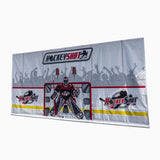
For outdoor shooting equipment that can handle winter conditions, portable targets and tarps designed for durability help structure your accuracy work.
Equipment That Handles Winter Conditions
Cold weather affects gear differently than indoor use. A few considerations help ensure your equipment holds up and your training stays productive.
Pucks behave differently in cold temperatures. Standard rubber pucks can become brittle and bounce unpredictably when frozen. Training pucks for cold weather include options designed to maintain consistent performance across temperature ranges. Having a variety of pucks allows you to match your training to conditions.
Sticks take more abuse outdoors. Rough ice, frozen surfaces, and contact with boards or snowbanks accelerate wear. Using a dedicated outdoor stick or an older game stick preserves your primary equipment for arena use.
Gloves matter more in cold conditions. Thin gloves allow better stick feel but sacrifice warmth. Heavier gloves protect your hands but reduce dexterity. Finding the right balance for your local conditions takes some experimentation. Many players bring two pairs and switch as needed.
For players looking to expand their outdoor training toolkit, exploring the best stickhandling products can help identify gear that works across different environments.
Building Mental Toughness Through Outdoor Practice
ODR training builds more than physical skills. The discomfort of cold weather, the imperfection of natural ice, and the lack of structured coaching all demand mental engagement that indoor training often doesn't require.
Players who train outdoors learn to embrace discomfort. When your fingers are cold and the ice is choppy, every drill requires more focus. That focus becomes habitual, and it shows up during games when fatigue sets in and conditions get difficult.
Outdoor training also fosters creativity. Without coaches directing every drill, players experiment. They try moves they've seen on TV. They invent games with friends. This unstructured play develops hockey sense and creativity in ways that organized practices cannot replicate.
The best players often credit pond hockey and backyard rinks as formative parts of their development. The freedom to experiment, fail, and try again without judgment builds confidence and love for the game.
Safety Considerations for Cold Weather Training
Training in cold conditions requires awareness that indoor sessions do not.
Dress in layers. Base layers that wick moisture, insulating mid-layers, and wind-resistant outer layers allow you to regulate temperature as activity level changes.
Monitor ice conditions carefully. Community ODRs are generally maintained and safe, but ponds and natural ice require caution. Know your local conditions and never skate alone on unverified surfaces.
Stay hydrated. Cold air is dry, and you lose moisture through breathing even when you don't feel thirsty. Bring water and drink regularly.
Recognize the signs of frostbite and hypothermia. Numbness, tingling, and skin discoloration are warning signs. Shorter, more frequent sessions often work better than long exposures in extreme cold.
Making ODR Season Count
The outdoor hockey window is short in most climates. Making the most of it means treating ODR time as genuine training with real purpose.
Set intentions before each session. Know what you want to work on, even if the session stays informal. A player who spends 30 focused minutes on stickhandling develops more than one who skates around aimlessly for two hours.
Embrace the conditions. Bad ice, wind, and cold are features of outdoor hockey. Instead of fighting them, use them to build adaptability. The player who can handle a puck on rough ice will find smooth arena surfaces feel easy by comparison.
Invite others when possible. Training partners create accountability and allow for drills that require two people. Friendly competition also raises the intensity of sessions naturally.
And finally, enjoy it. ODR season connects players to the purest form of the game. The skills you build matter, but so does the love of hockey that outdoor play nurtures. The best training happens when you're having fun.
Get outside. The ice is waiting.